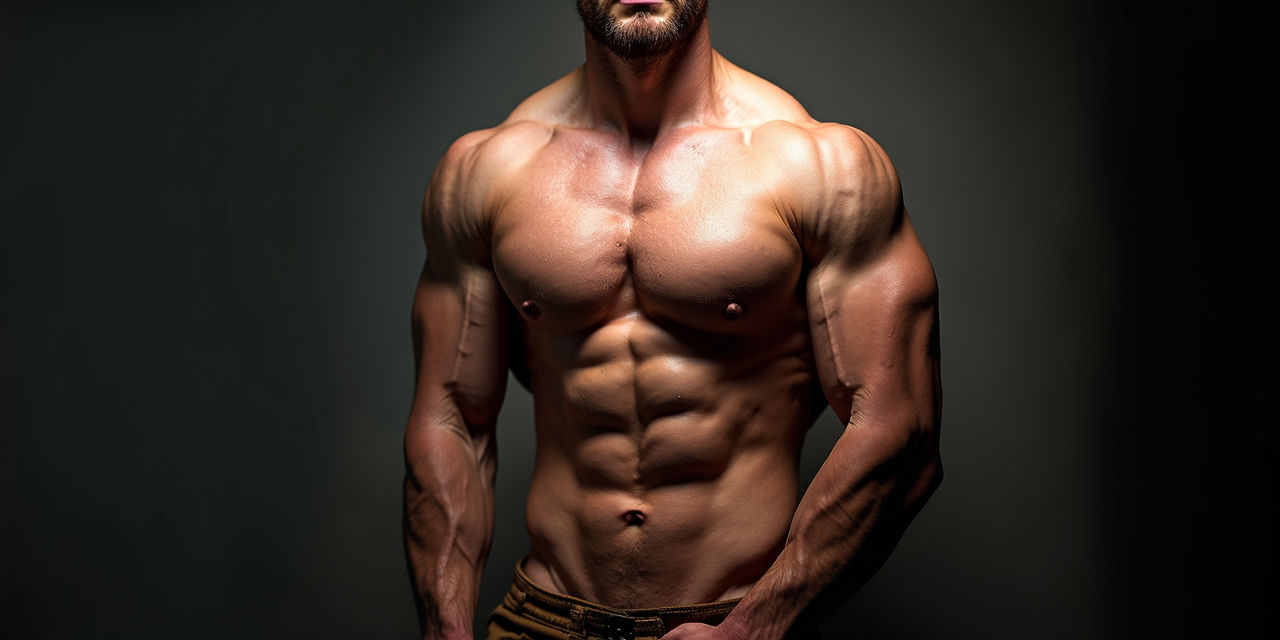
When Xu Mingjie, standing 183cm tall and weighing 340 jin (170kg), took off his shirt to reveal clearly defined 8-pack abs, the entire fitness community was stunned. This post-00s young man from Dalian, Liaoning has shattered all our stereotypes about “overweight people” with his contrasting physique.
On short video platforms, the hashtag #ModernXuChu has garnered over 10 million views, with netizens marveling at his armor-like muscles while wondering: Is this a fitness miracle, or does it signal underlying health risks?
Xu Mingjie’s fitness journey began in 2020 when he was 17 years old and weighed 125kg, with the simple initial goal of losing weight. But fate took a turn when he discovered powerlifting.
“I found I had a special talent for strength training,” Xu mentioned in an interview. “From that moment, my goal shifted from weight loss to muscle gain.”
五年如一日的坚持,让他的体重从最初的250斤增长到现在的340斤,却奇迹般地练就了令人艳羡的腹肌。
Five years of consistent training saw his weight increase from 125kg to 170kg, while miraculously developing enviable abdominal muscles.
Even more impressive are his athletic achievements. Xu Mingjie has not only broken multiple Asian weightlifting records but also astonished the fitness community with his 320kg squat.
Notably, the multiple Asian powerlifting records he set while weighing 165kg demonstrate that larger individuals can achieve excellence through scientific training. These professional performances have made many fitness experts reconsider the relationship between weight and athletic ability.
However, medical experts maintain a more cautious perspective on this phenomenon. Professor Wang, a sports rehabilitation expert from Beijing Sport University, pointed out:
“While Xu’s case is indeed special, we need to understand the difference between muscle mass and body fat percentage. His body fat percentage exceeds 15%, which theoretically shouldn’t produce such clearly defined abs.”
This abnormal phenomenon might be related to his genetic muscle distribution characteristics and specific training methods, but maintaining 170kg body weight long-term still places additional stress on the cardiovascular system and joints.
From a health perspective, rehabilitation experts acknowledge the benefits of appropriate muscle building for larger individuals:
增强关节保护 – Enhanced joint protection
维持基础代谢率 – Maintained basal metabolic rate
改善皮肤松弛 – Improved skin tightness
徐明杰本人也表示,健身后”一直没生过病”。但这种个案是否适用于所有大体重人群仍需谨慎评估。
Xu himself stated that he “hasn’t gotten sick since starting fitness training.” However, whether this individual case applies to all larger people requires careful evaluation.
“普通人模仿这种训练模式可能存在风险,建议在专业指导下循序渐进。” – 健身教练李强
“Ordinary people imitating this training model may face risks, and should progress gradually under professional guidance.” – Fitness coach Li Qiang
Analyzing from the perspective of training science, Xu’s success lies in finding the training direction that suits him best. Powerlifting training allowed him to fully utilize his natural advantages, while continuous abdominal specialization created those incredible 8-pack abs.
“这种个案需要特定的遗传基础、科学的训练计划和严格的饮食控制,三者缺一不可。” – 健身专家张教练
“Such individual cases require specific genetic foundations, scientific training plans, and strict dietary control – all three are indispensable.” – Fitness expert Coach Zhang
For ordinary teenage fitness enthusiasts, Xu’s case provides important inspiration:
健身应该是个性化的旅程,而不是盲目追随潮流
重要的是找到适合自己的运动方式,而不是一味追求特定的身体外形
认识到社交媒体展示的局限性 – 背后的付出和个体差异往往被忽略
Fitness should be a personalized journey, not blindly following trends. What matters is finding the exercise method that suits you, not relentlessly pursuing a specific body shape.
As more similar cases emerge, we might need to establish more comprehensive health assessment systems rather than relying solely on Body Mass Index (BMI). After all, true health should encompass multiple dimensions including physical function, athletic ability, and mental wellbeing.